

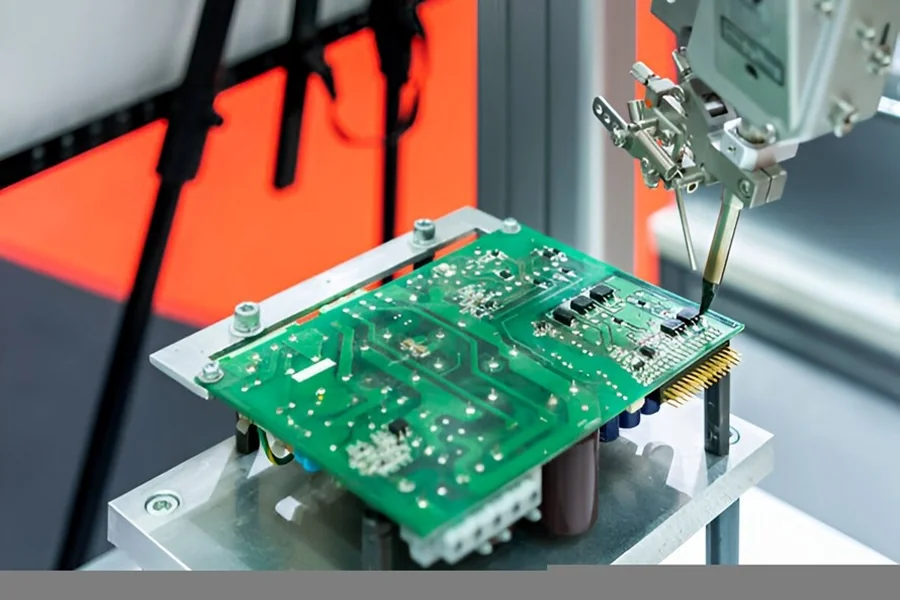
Multilayer PCB assembly plays a central role in today’s advanced electronics, offering compact size, excellent functionality, and superior electrical performance. As devices become smarter, smaller, and more powerful, multilayer PCBs have become the preferred choice for engineers and manufacturers. These boards consist of multiple layers of conductive material stacked together with insulating layers in between, enabling greater circuit density and more complex designs. Multilayer PCB assembly is essential for applications that require speed, reliability, and stable signal integrity.
What Makes Multilayer PCB Assembly Unique
The Structure of Multilayer PCBs
A multilayer PCB typically contains three or more conductive layers, often ranging from four to twenty or more. These layers are laminated together under heat and pressure to create a compact and stable board. The structure supports high-speed data transfer, reduced electromagnetic interference, and improved performance in demanding environments.
Benefits of High Layer Density
By stacking multiple layers, multilayer PCBs offer significantly more routing space without increasing the board’s footprint. This makes multilayer PCB assembly ideal for compact consumer devices, communication systems, industrial controls, and advanced computing equipment. The increased density allows the integration of complex circuits that would be impossible with single or double-sided boards.
Key Advantages of Multilayer PCB Assembly
Reliability and Durability
The multilayer design, combined with strong lamination, results in a robust board capable of withstanding mechanical stress and thermal fluctuations. This makes multilayer PCB assembly a reliable choice for mission-critical applications in aerospace, automotive, medical, and defense sectors.
Exceptional Electrical Performance
One of the biggest advantages of multilayer PCB assembly is signal integrity. Smaller distances between layers reduce noise and interference, providing clean and stable signal transmission. This benefit is essential for high-frequency devices, wireless communication modules, and data-heavy electronics.
Space-Saving and Lightweight
Multilayer PCB assembly allows manufacturers to reduce device size without sacrificing performance. Instead of using large boards to fit complex circuits, engineers can distribute the circuitry across multiple layers. This helps create lighter, more compact products suitable for modern portable electronics.
The Process Behind Multilayer PCB Assembly
Layer Preparation and Lamination
The assembly begins with the preparation of each conductive layer, followed by lamination where all layers are pressed together. Precise alignment is crucial to ensure that vias and traces connect accurately. Technologies such as blind vias, buried vias, and microvias are often used to improve routing efficiency and compactness.
Component Placement and Soldering
Once the multilayer PCB is fabricated, automated machines place SMT and through-hole components according to the design. Solder paste application, reflow soldering, and wave soldering ensure strong and reliable joints. Due to the complexity of multilayer PCB assembly, exact temperature control and soldering profiles are required to maintain board integrity.
Inspection and Testing
Since multilayer designs are more complex than traditional boards, stringent inspection and testing are essential. AOI, X-ray inspection, and flying probe testing help verify internal connections, solder joints, and component integrity. These steps ensure that the final product is reliable and meets industry standards.
Applications of Multilayer PCB Assembly
Consumer Electronics
Smartphones, tablets, wearables, and laptops all rely on multilayer PCB assembly to deliver high performance within compact designs. Multiple layers support powerful processors, memory modules, sensors, and communication chips.
Industrial and Automotive Electronics
Automation systems, sensors, engine control units, and power modules require robust and stable circuits. Multilayer PCB assembly ensures the durability and long-term performance these applications demand.
Medical and Communication Equipment
Advanced imaging systems, diagnostic devices, telemetry modules, and communication infrastructure depend on multilayer PCBs for speed, precision, and reliability.
Why Multilayer PCB Assembly Is Essential for Modern Design
Multilayer PCB assembly is not just a manufacturing trend—it is a necessity for advanced technology. Whether the goal is to increase processing power, improve reliability, or reduce device size, multilayer PCBs make it possible. They offer unmatched versatility and performance, supporting innovations across industries. As electronic designs become more compact and data-intensive, multilayer PCB assembly will continue to shape the future of modern electronics.
Final Thoughts
Multilayer PCB assembly stands as the foundation of today’s high-performance electronic systems. Its ability to support dense routing, high-speed signaling, and reliable connections makes it indispensable across various industries. If you are developing products that require precision, durability, and advanced functionality, partnering with a leading PCBA China provider can help you achieve superior quality, efficient production, and reliable results from prototype to large-scale manufacturing.
