

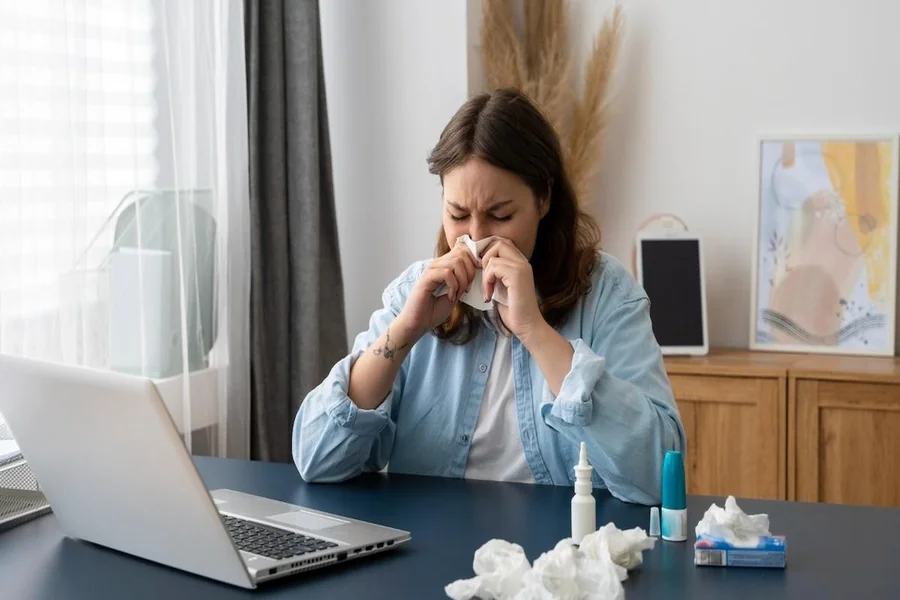
In Florida’s constant humidity, mold spores don’t just lurk around—they thrive, floating indoors from vents, damp corners, or outside air after rain. For the 3–10% of people that are allergic to them, mold exposure triggers an immune overreaction: sneezing fits, stuffy or runny nose, itchy/watery eyes, coughing, wheezing, throat irritation, or skin rashes.
Symptoms hit hardest in muggy basements, after heavy rain storms, or when AC recirculates hidden mold growth in your air ducts. If your nose clogs and eyes burn indoors but ease up outside, mold’s likely the main culprit. Relief comes in two parts: quick symptom control and cutting exposure long-term.
Over-the-counter medications for fast relief. Start here for most people—these target histamine (the chemical driving itch and swelling) or inflammation.
- Antihistamines — Oral options like cetirizine (Zyrtec), loratadine (Claritin), or fexofenadine (Allegra) block histamine to ease sneezing, runny nose, and itchy eyes. Non-drowsy formulas work well during the day; take them proactively before high-exposure times (e.g., post-rain or yard work). For combo relief, some add a decongestant to shrink swollen nasal passages.
- Nasal corticosteroid sprays — Often the most effective for mold allergies. Fluticasone (Flonase), budesonide (Rhinocort), triamcinolone (Nasacort), or mometasone reduce nasal inflammation and prevent symptoms from building. Use daily during mold season—they’re safe long-term and work best when started before heavy exposure.
- Eye drops — Antihistamine or mast-cell stabilizer drops (like ketotifen) flush spores and calm itchy, red eyes.
- Nasal saline rinses — A neti pot or squeeze bottle with sterile saline flushes spores from nasal passages after exposure—simple, drug-free, and surprisingly effective for congestion.
If OTC meds just aren’t enough to help you get past the issues, see an allergist. They might prescribe stronger nasal sprays, oral steroids for flares, or quick-relief inhalers if asthma’s involved.
Long-term strategies to dial down exposure. Medications treat symptoms and prevention starves the reaction.
- Keep your indoor humidity levels around 30–50% (below 60% minimum) with AC set to “auto” fan and dehumidifiers running in problem areas. Florida homes often need extra dehumidification during rainy stretches—monitor with a hygrometer.
- Run True HEPA air purifiers in bedrooms and main living spaces to capture airborne spores before they settle.
- Ventilate moisture sources: exhaust fans in bathrooms/kitchens, vented dryers, and quick fixes for leaks or AC drain clogs.
- Limit outdoor time on damp, high-spore days (check local counts via apps or National Allergy Bureau). Wear an N95 mask for yard work, then shower immediately to rinse off clinging spores.
- For severe, persistent cases, immunotherapy (allergy shots or sublingual drops) desensitizes your immune system to mold over time—often the best path to lasting relief.
When it comes to Florida’s climate, mold allergies aren’t just a seasonal issue—they’re around year-round unless you stay ahead of all the moisture. Consider combining helpful meds for immediate comfort with strict humidity control and filtration for fewer flares. If any of your symptoms disrupt your sleep, work, or breathing, get tested quickly—proper management makes a huge difference. Breathe easier; it’s doable.
